
 Automation
 AI + Automation
 Bank
Bank
 Insurance
 Logistics


On June 27, a group of graduate students from Shanghai National Accounting Institute visited I-Search for an exchange and learning session focused on intelligent finance automation, AI workflow applications, and financial digital transformation.

Against the backdrop of AI technology being increasingly integrated into enterprise management and the continued advancement of financial digital transformation, I-Search drew on its product capabilities and practical experience in agentic automation to organize a program combining company visits, theoretical instruction, and hands-on practice. The event helped students gain a closer understanding of how intelligent automation technologies are applied in real-world corporate finance scenarios.
————————————————————————————————————————————————————————————————————————————————————————————————
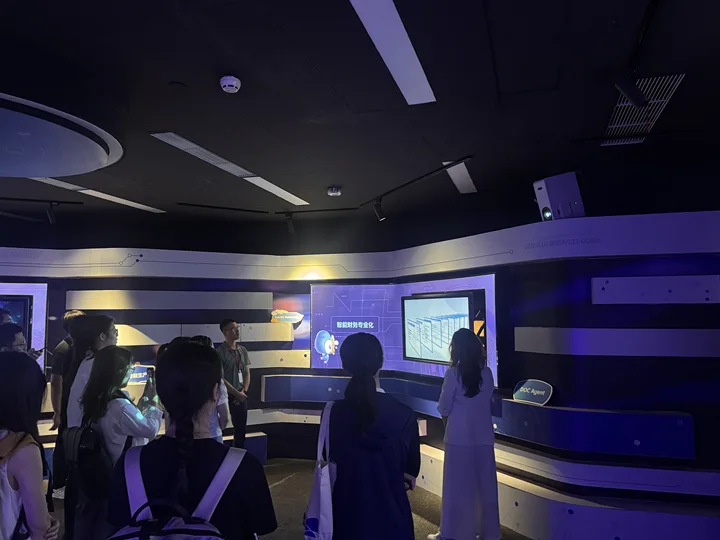
In the morning, led by Xu Feitong, Marketing Director of I-Search, the students visited the company’s exhibition hall. Through on-site explanations, product demonstrations, and case sharing, they gained a more intuitive understanding of I-Search’s capabilities in AI Agents, intelligent document processing, and enterprise-level agentic automation platforms.
Focusing on typical scenarios such as finance shared services, document processing, process collaboration, and business analysis, the I-Search team demonstrated how intelligent automation can be embedded into enterprise workflows to help finance teams reduce repetitive work, improve processing efficiency, and support management decision-making. The visit also helped students better understand the practical path of AI technology from “conceptual understanding” to “scenario-based implementation.”
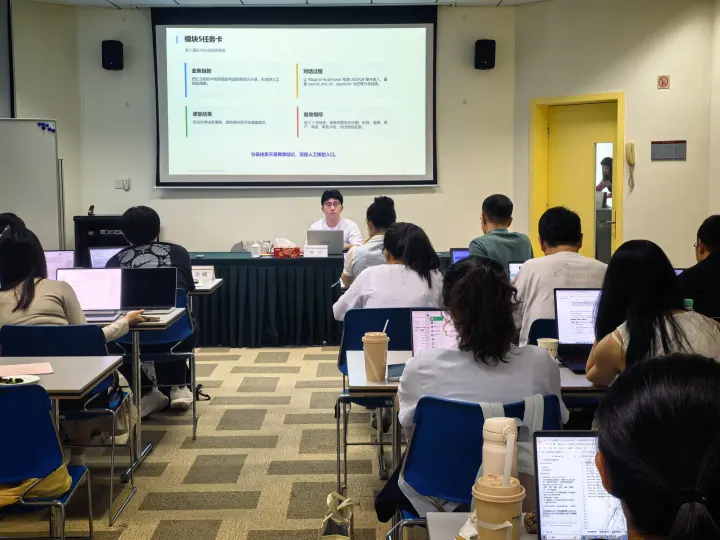
During the theoretical training session, I-Search’s senior instructor discussed the current trends in financial digital transformation, the development of agentic automation, the application of AI tools in finance scenarios, and the changing capability requirements for finance professionals. The course was closely connected to real business practices, enabling students to understand technology trends while further reflecting on how financial work may evolve in the future.
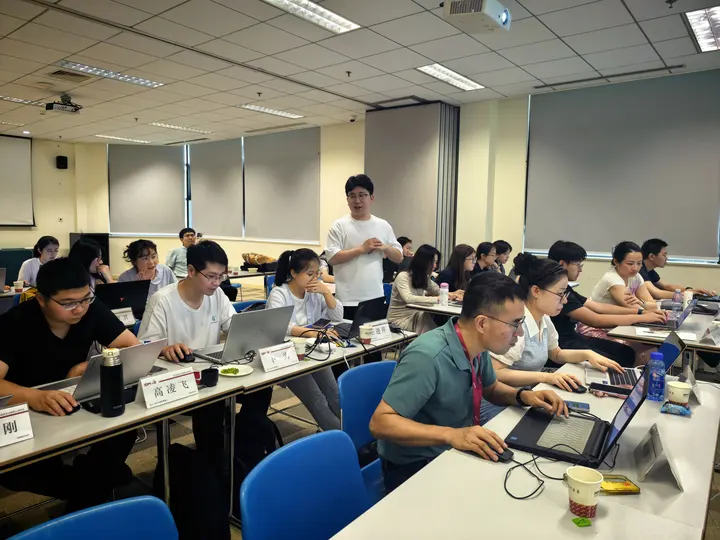
After the lunch break, the course moved into a combined theory and practice session. To provide a more hands-on experience, I-Search opened Magical Automator trial accounts for each student. The practical session was built around a business scenario involving a project-based intelligent equipment manufacturing company, with “CFO business quality diagnosis” as the core task.
Guided by the instructor, students engaged in multiple rounds of natural-language dialogue with Magical Automator to generate business quality indicators, customer risk signals, manual verification checklists, and one-page reporting materials. Through this process, they experienced the full journey of an AI workflow from concept to execution. By building AI workflows themselves, students gained a more direct understanding of the value of AI tools in financial analysis, business diagnosis, and management reporting.
After the course, students said that the event combined observation of real corporate scenarios with hands-on platform operation. Compared with purely theoretical learning, this format helped them better understand how intelligent finance automation can be applied in actual work. Some students also noted that AI tools are not simply replacing finance professionals, but helping them process information more efficiently, organize analytical logic, and translate professional judgment into clearer business communication.
Moving forward, I-Search will continue to deepen cooperation with Shanghai National Accounting Institute and other universities and research institutions. Through industry-academia-research collaboration, I-Search will further integrate real enterprise scenarios, intelligent automation platforms, and talent development, promoting the application of enterprise-level agentic automation technologies in more teaching and practical scenarios.
