 Automation
 AI + Automation
 Bank
Bank
 Insurance
 Logistics


About Hörmann Door Production
As a leading European manufacturer of door products, Hörmann was founded in 1935. Today, the company has more than 6,000 employees, over 40 factories worldwide, three factories in China, and has delivered more than 20 million doors.
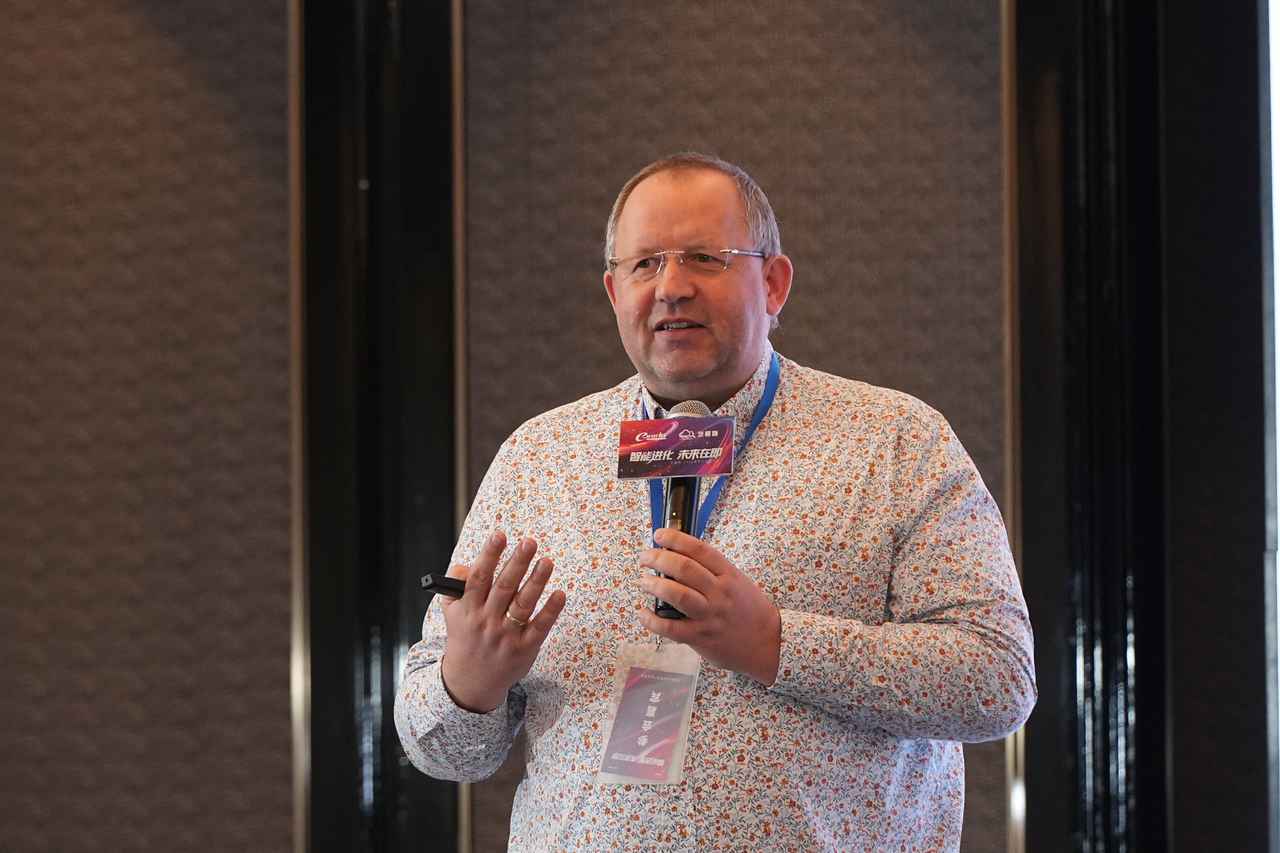
Mario Bock, Director of Hörmann Door Production Changshu Factory
1. Don’t Get Lost in the AI Hype, factory digitalization should be measured by real results.
As AI continues to gain momentum, companies can easily be drawn to new buzzwords, emerging technologies, and various pilot projects. But for factory managers, the real challenges are often much more specific: large amounts of administrative time are consumed by repetitive tasks, ERP data entry remains prone to errors, and cross-department communication still relies heavily on email coordination.
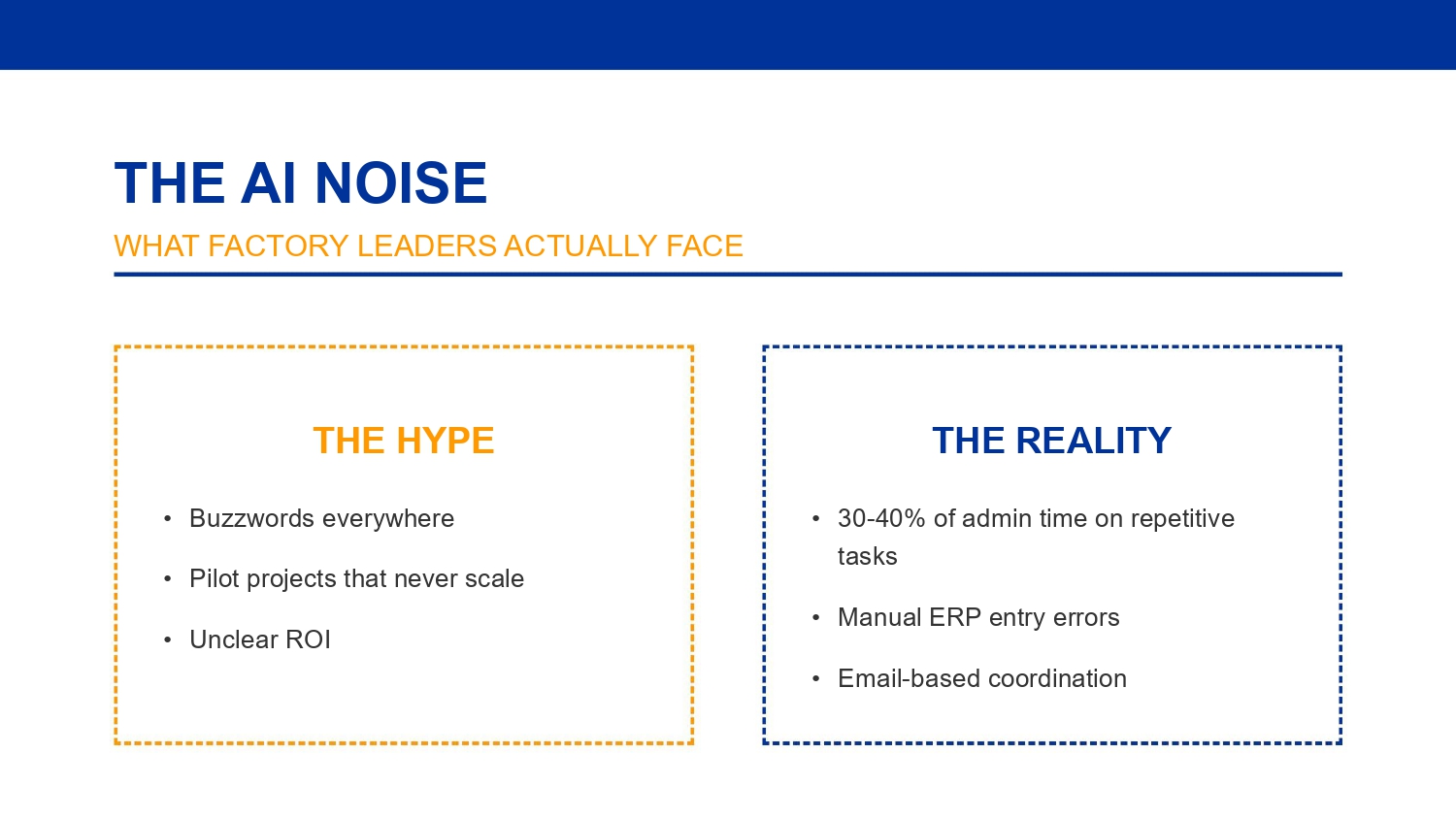
Therefore, Mario’s presentation did not focus on “how advanced AI is,” but instead returned to the factory business itself: which processes are the most time-consuming, which steps are most prone to errors, and which tasks can be reliably automated. Truly effective intelligent transformation is not about chasing trends, but about solving real problems in production and operations.
2. RPA + AI Agents Work Together, moving Automation from “Execution” to “Decision-Making”
In Hörmann’s practice, RPA and AI agents play different roles. RPA is better suited for tasks with clear rules and fixed processes, such as clicking, data entry, and file transfer. AI agents, on the other hand, can read documents, understand language, identify patterns, and assist in making judgments.
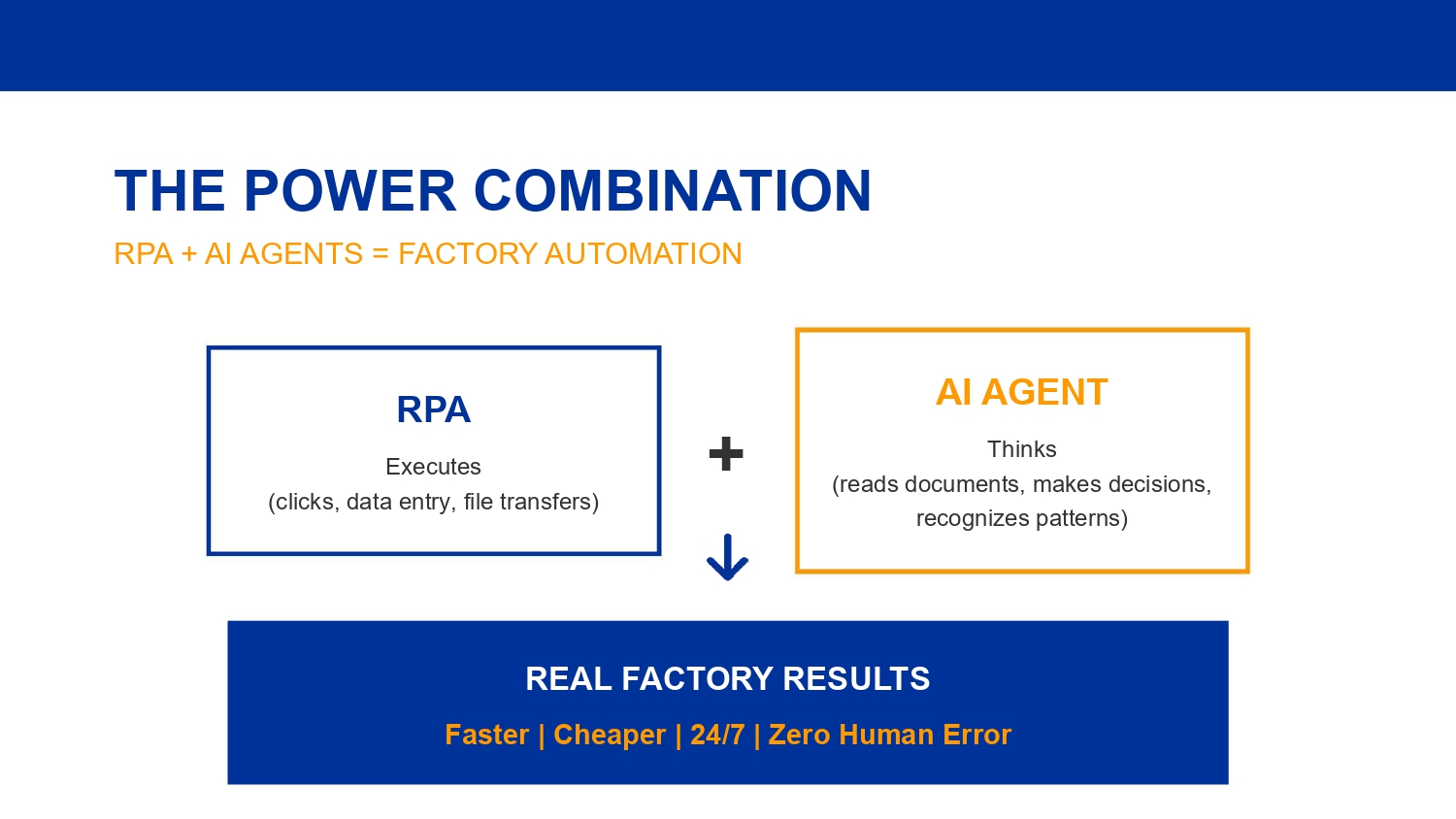
When the two are combined, RPA is responsible for stable execution, while AI agents handle understanding and judgment. This allows enterprises to turn processes that previously relied on manual work into more efficient automated workflows. With this combination, factory automation is no longer just about “operating on behalf of people,” but begins to gain the ability to understand information, handle changes, and support decision-making.
3. From WICAM to the Digital Supply Chain, real Cases Achieve 70% Cost Reduction and 3x Faster Throughput
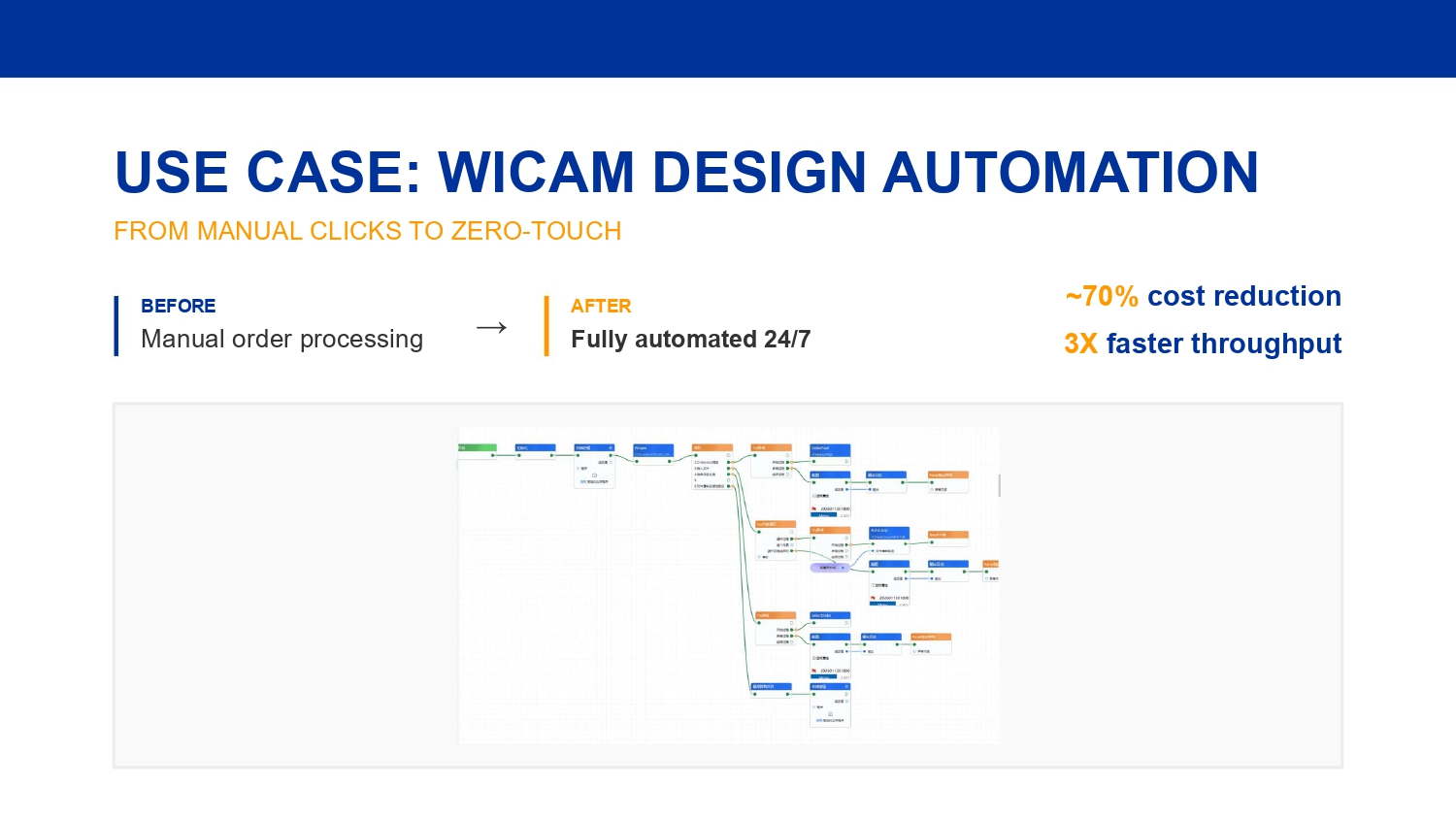
In the WICAM design automation scenario, Hörmann upgraded a process that previously relied on manual clicking and order handling into a zero-touch workflow that runs automatically 24/7, achieving approximately 70% cost reduction and a threefold increase in throughput efficiency.
In the digital supply chain scenario, the system can automatically complete folder creation, file classification, and document routing, reducing the time consumption and error risks caused by manual file handling. Overall, through the collaborative application of RPA and AI agents, Hörmann achieved a return on investment of more than 3x in the first year and reduced the cost of individual automated processes by approximately 70%. This also laid the foundation for the large-scale application of agent-based automation in the future.
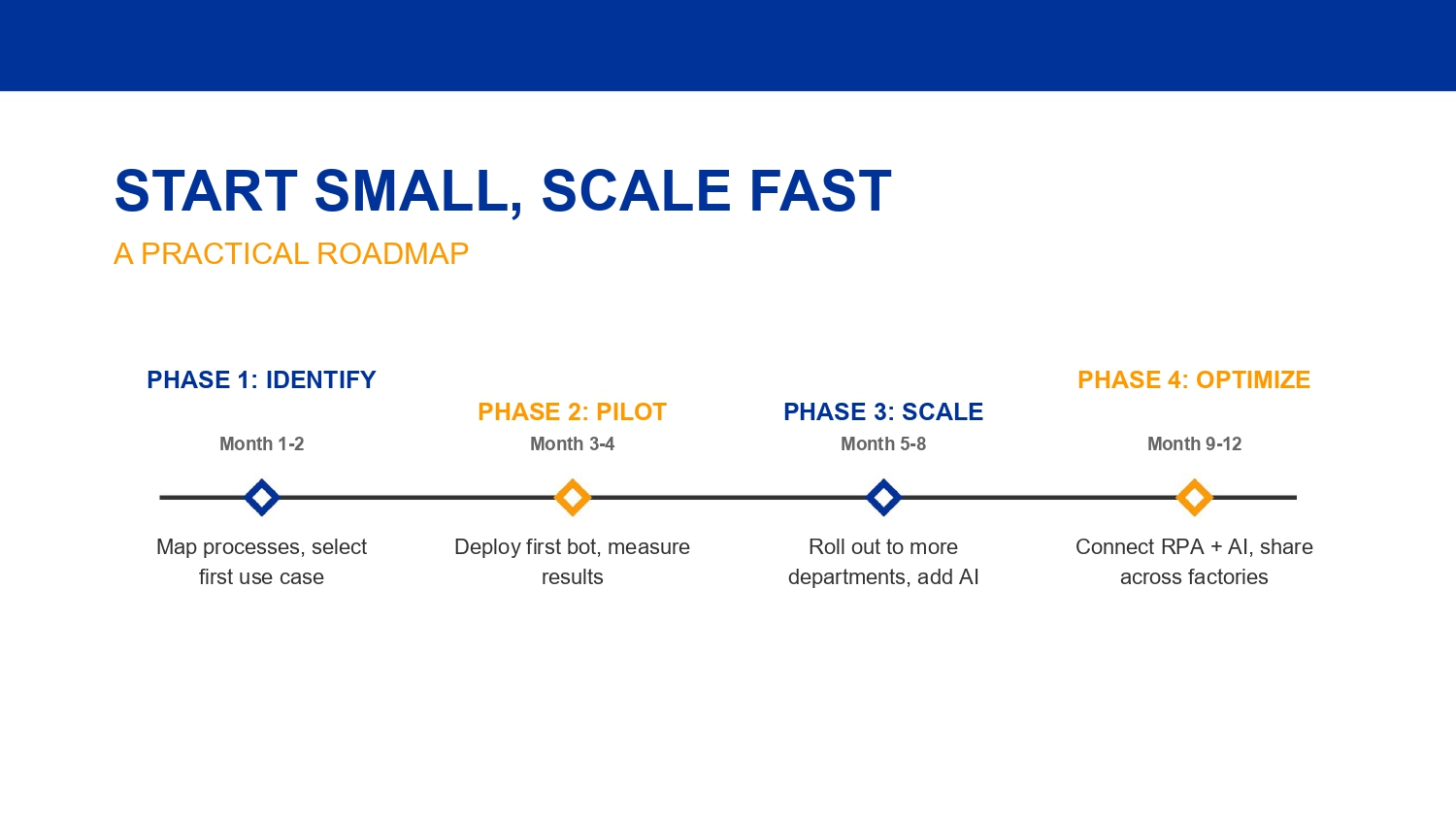
4. Start with Small Scenarios, move Toward a New Stage of Factory Intelligence
Hörmann’s experience shows that factory intelligence does not necessarily need to begin with large and complex projects. A more practical path is to first identify high-frequency, repetitive processes with clear rules, select one scenario for a pilot project, and then gradually build replicable platform capabilities through result validation, departmental expansion, and the integration of AI capabilities.