
 Automation
 AI + Automation
 Bank
Bank
 Insurance
 Logistics


At the 2026 i-Search Spring Product Launch Conference, Chaoyang Zhang, Operations Director of the Digital Business Department under ZTT Digital Industry Group, delivered a presentation titled Empowering “Digital and Intelligent” Employees: RPA-Led New Ecosystem of Human-Machine Collaboration. He shared ZTT’s practical achievements in the digital and intelligent transformation of the manufacturing industry.
As a company that started in optical fiber communications and has continued to expand across information communications, smart grids, new energy, marine economy, and digital economy, ZTT has built an industrial presence covering more than 80 subsidiaries and over 16,000 employees. In 2024, its sales revenue exceeded RMB 100 billion.
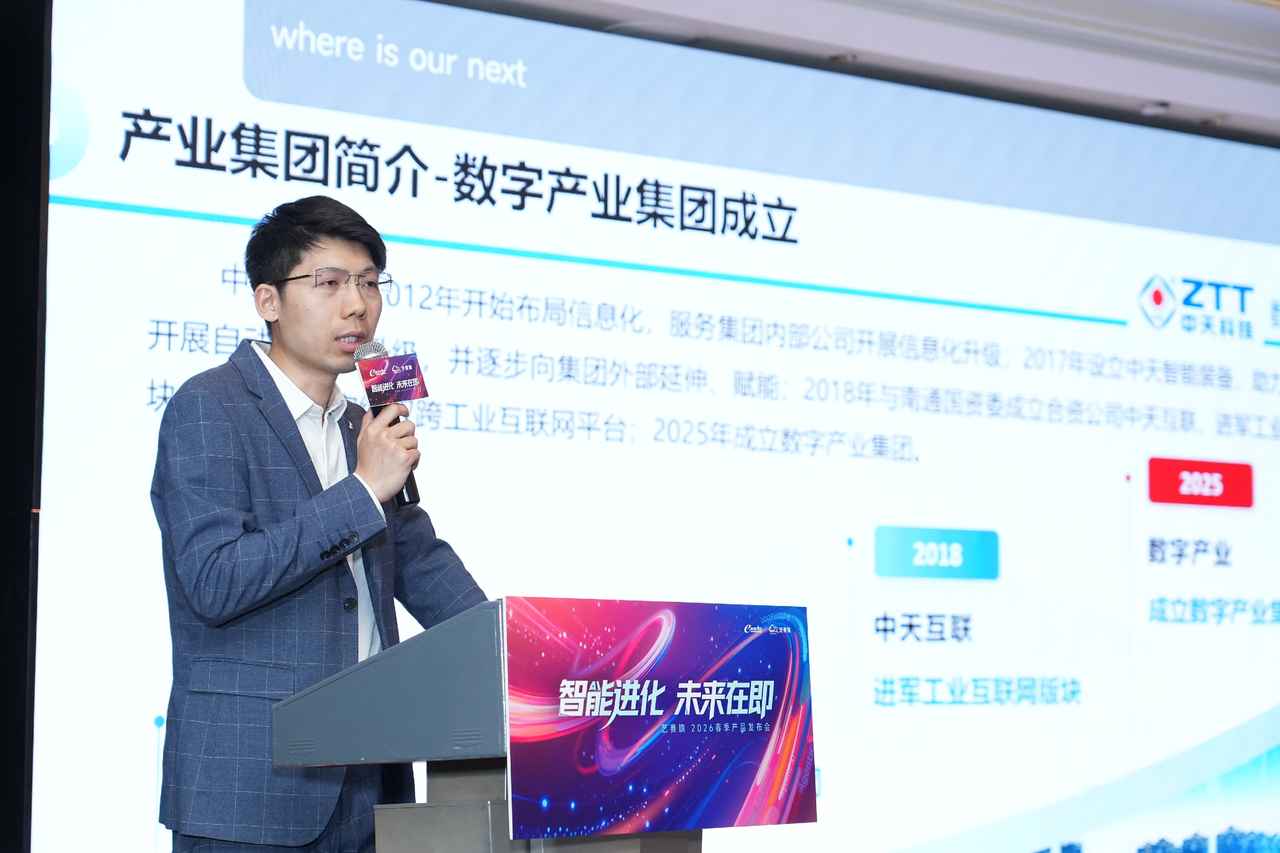
In this presentation, ZTT focused on real business scenarios to demonstrate how RPA digital robots and AI agents can move deep into enterprise workflows, helping manufacturing companies shift from “people searching through systems, manually entering data, and repeatedly performing routine tasks” to a new stage of “automated system flows, rapid data application, and employees focusing on higher-value work.”
1
RPA Process Automation
Assigning Repetitive Work to “Digital and Intelligent Employees”
Manufacturing companies often face challenges such as multiple systems, lengthy processes, and frequent cross-system operations. With i-Search RPA digital robots, ZTT has realized automated business process flows without modifying its existing systems.
Currently, ZTT has deployed 22 robots, covering 112 business scenarios, with more than 20,000 cumulative runs and an execution accuracy rate of 100%.
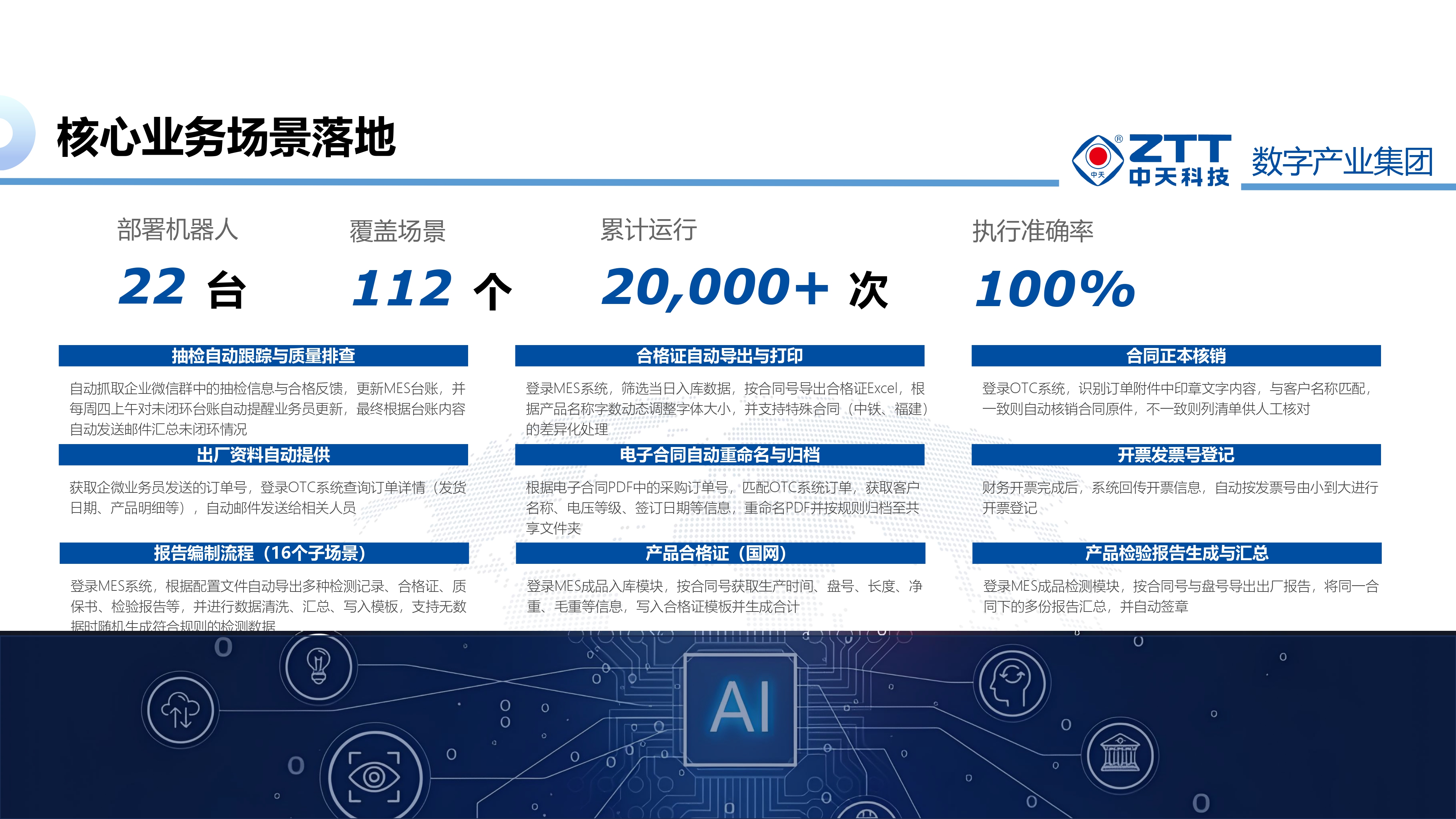
These robots have been applied to multiple high-frequency scenarios, including quality report generation, inspection tracking, certificate export, contract verification, factory document provision, electronic contract archiving, invoice registration, and report preparation.
Taking intelligent quality management as an example, robots can automatically obtain testing data and generate optical fiber inspection reports and quality certificates, reducing the time employees spend repeatedly logging into systems, exporting data, and organizing documents.
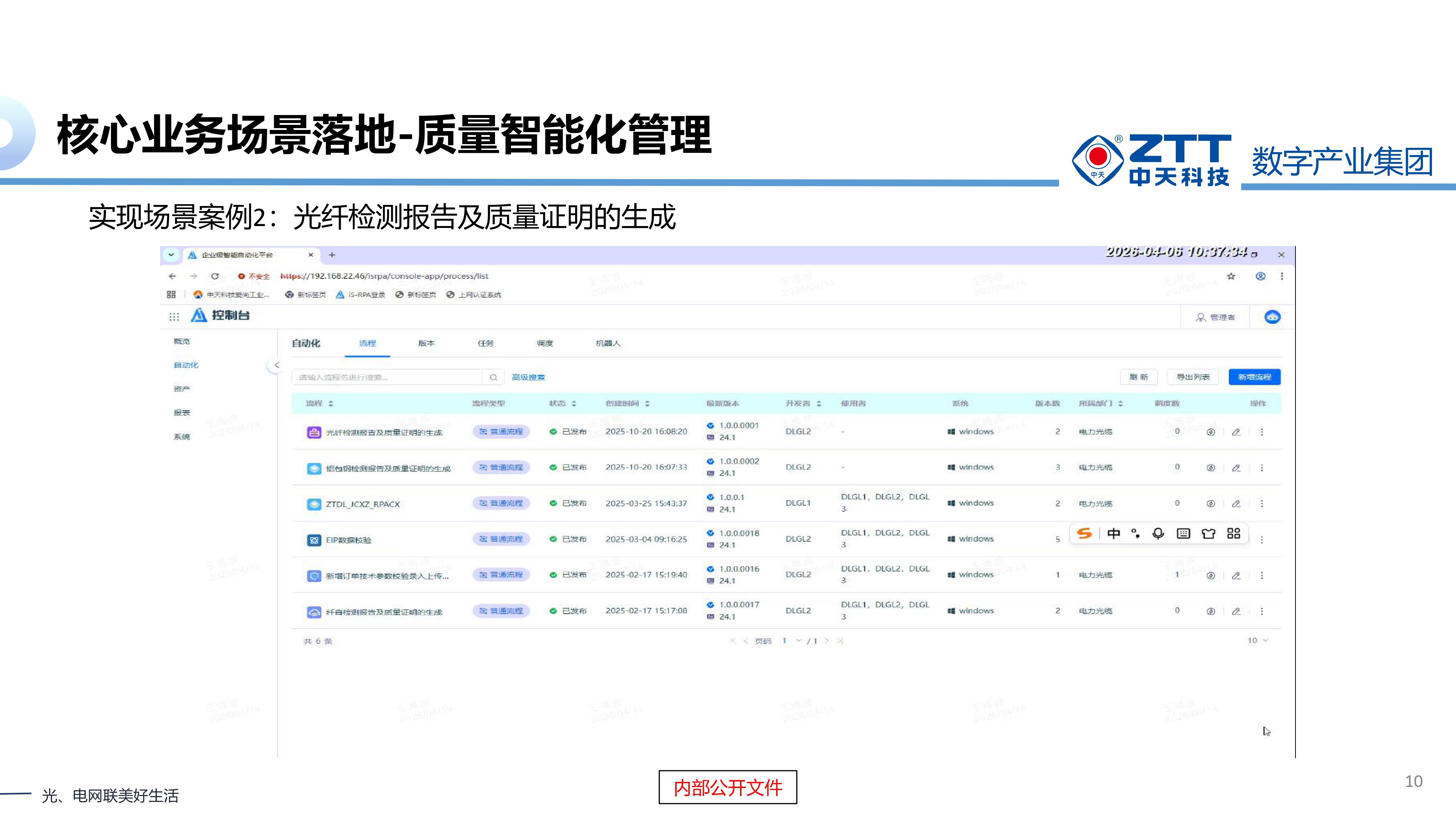
From “manual step-by-step operation” to “automatic robot execution,” RPA is helping enterprises free up manpower, allowing employees to focus more on exception handling, process management, and high-value decision-making, while significantly reducing process time.
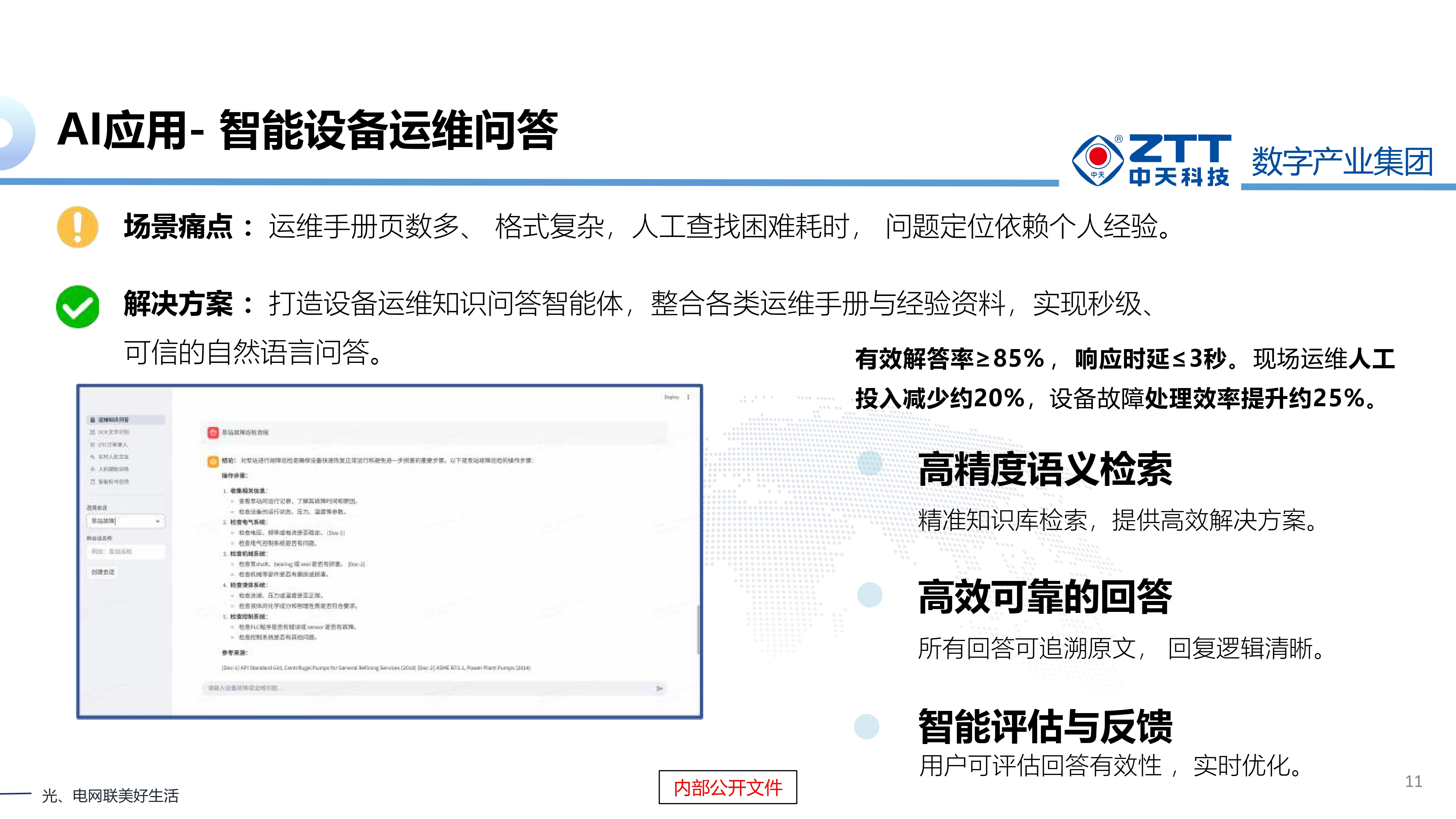
AI Agent Applications
Moving from Automation to Intelligence
3
AI + Large Model Deepening
Creating More Intelligent Scenarios for Manufacturing
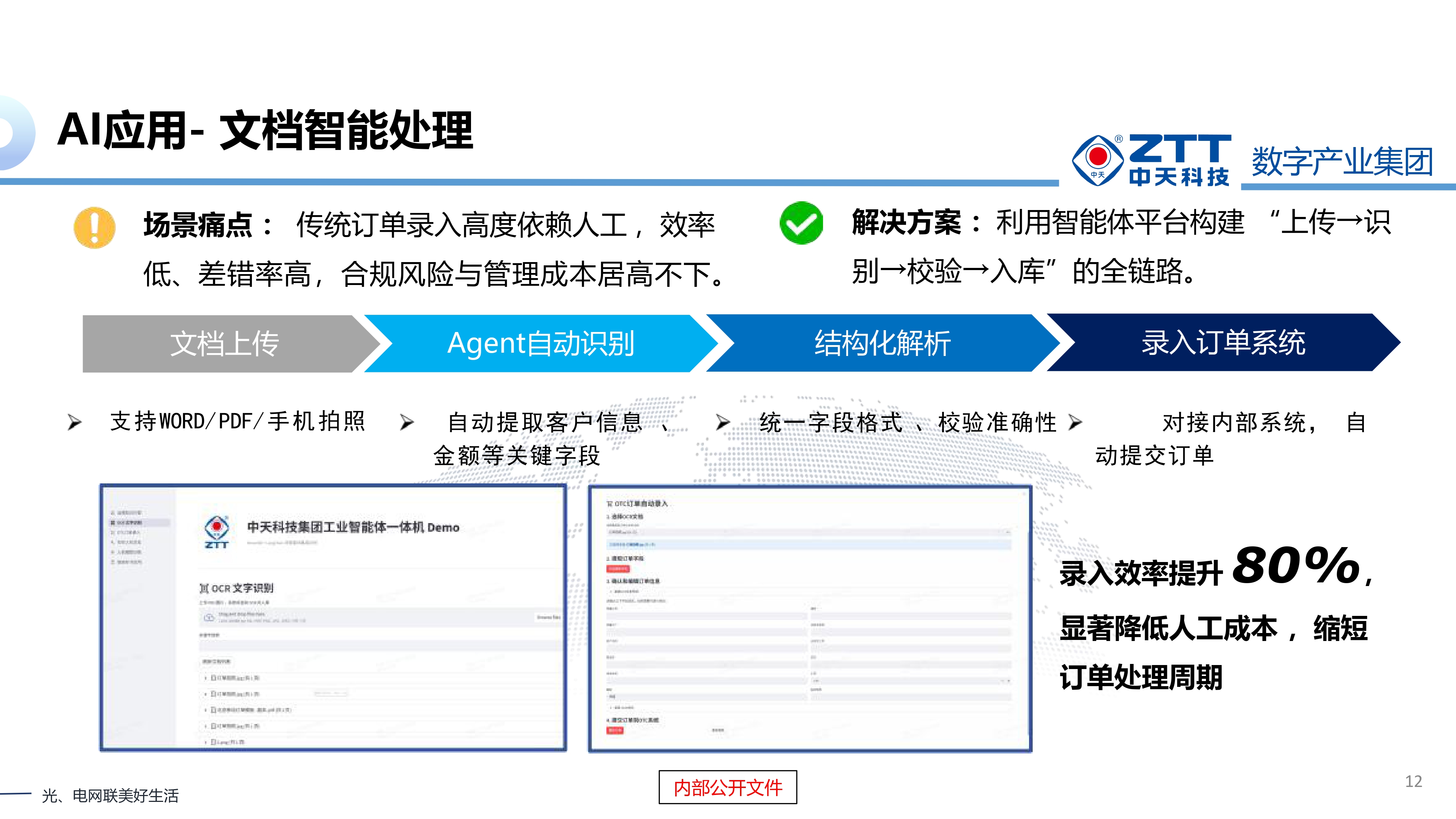
In the document intelligent processing scenario, ZTT has built a full-chain process of “uploading, recognition, verification, and system entry.” It supports multiple formats, including Word documents, PDFs, and mobile photo uploads, improving data entry efficiency by 80%.
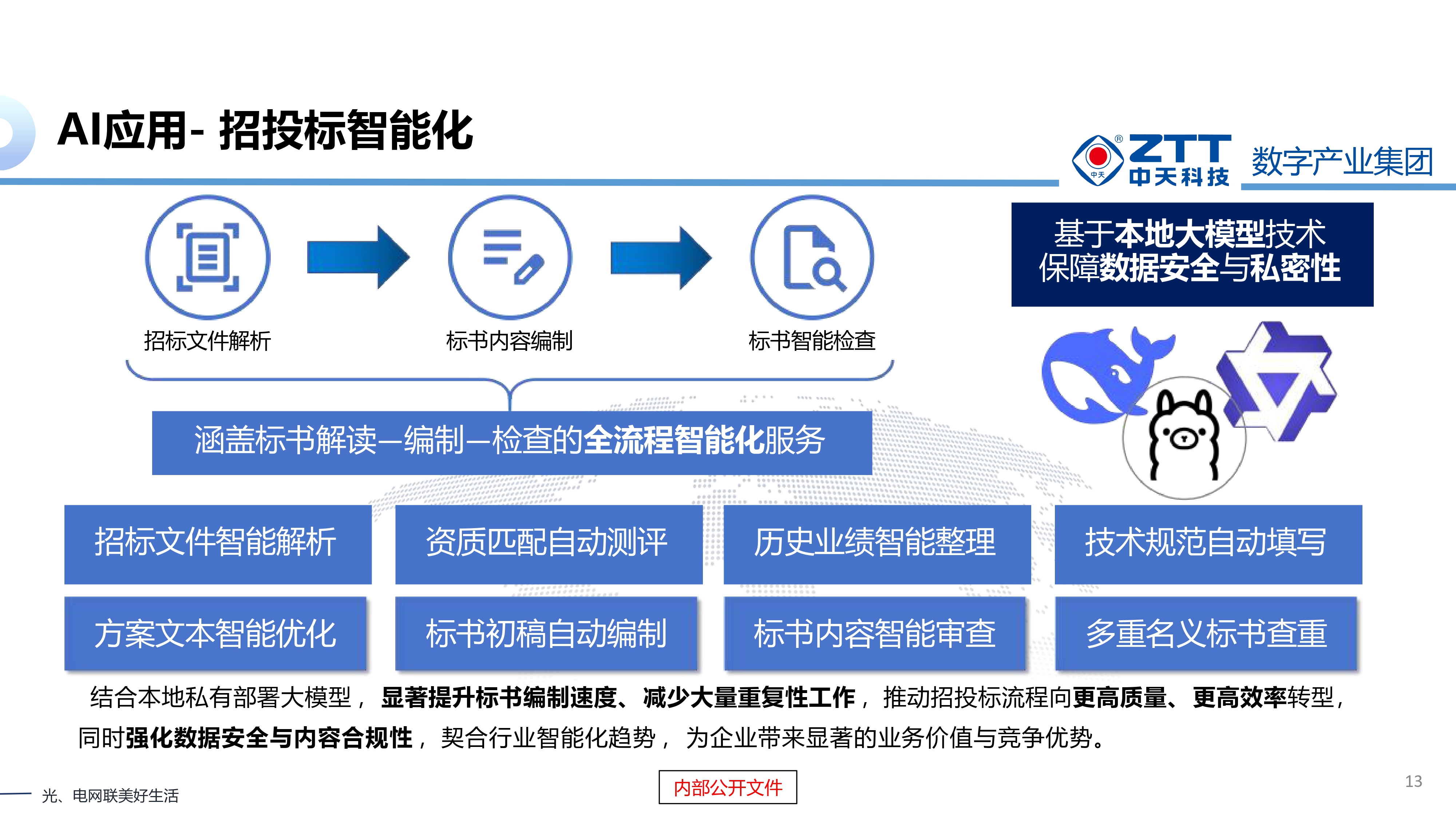
In the intelligent bidding scenario, ZTT combines locally and privately deployed large models to cover processes such as tender document analysis, bid document preparation, and intelligent bid review.
In the ultra-complex graphic and text understanding model, the system can extract information from technical agreements, contracts, and drawings, then generate production documents based on internal control standards and process experience. The generation accuracy for designated templates can reach 100%, with an average recognition accuracy of 98% and an average single-page response time of less than 2 seconds. The model has already empowered five subsidiaries.
4
Cost Reduction and Efficiency Improvement
Making the Value of Automation Visible
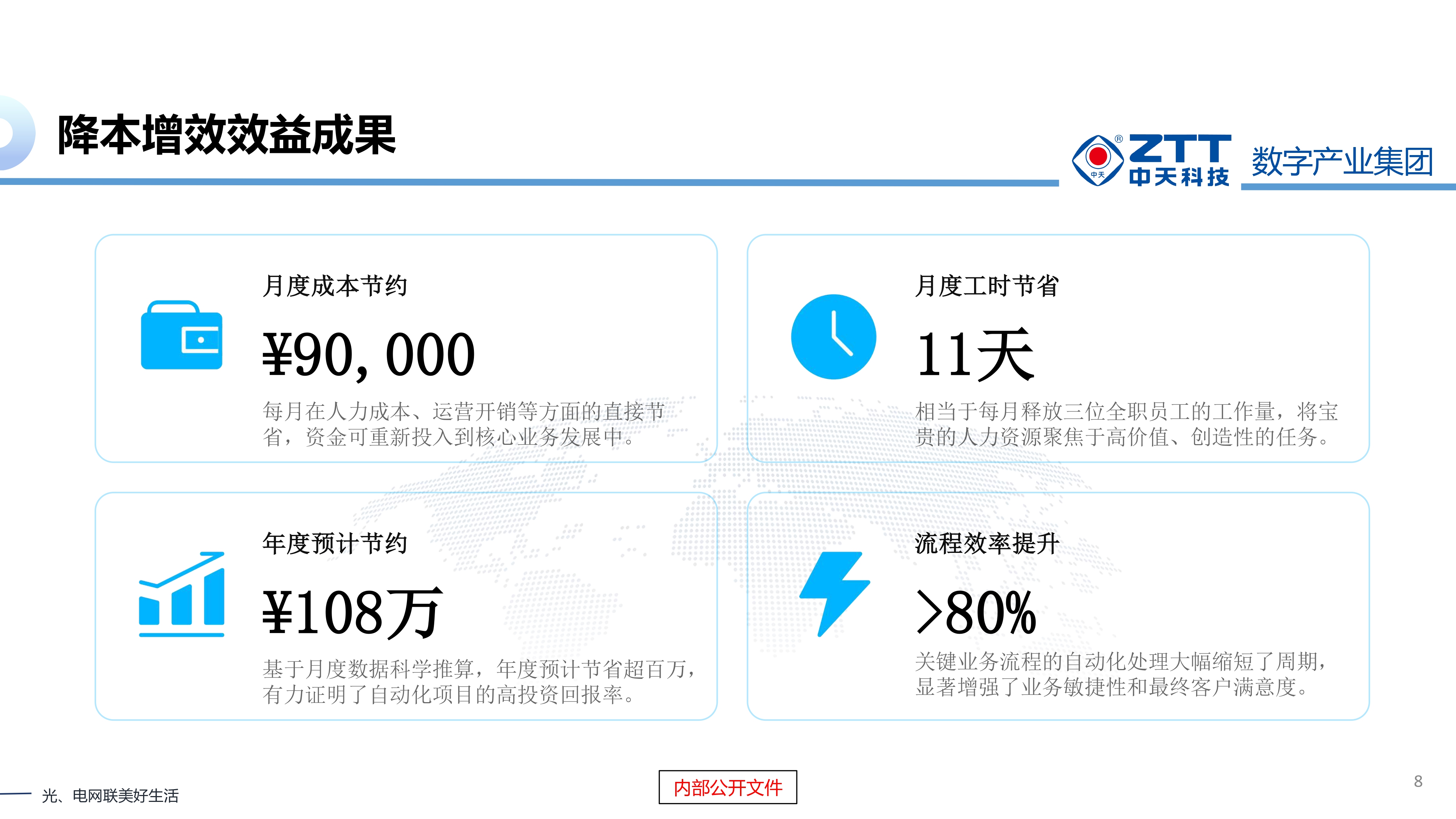
ZTT’s RPA project has delivered measurable results: monthly cost savings of approximately RMB 90,000, estimated annual savings of RMB 1.08 million, around 11 days of work hours saved per month, and a process efficiency improvement of more than 80%.
5
A New Ecosystem of Human-Machine Collaboration
Opening a New Stage of Intelligent Manufacturing
From quality report generation, inspection tracking, and contract verification to equipment maintenance Q&A, intelligent document processing, and smart material allocation, ZTT is embedding RPA, AI, and large model capabilities into more specific business processes.
For manufacturing companies, these applications are no longer isolated tools. Instead, they are gradually connecting key areas such as quality management, contract management, document archiving, equipment maintenance, and production decision-making, making processes more stable, data flows more accurate, and business collaboration more efficient.
In the future, as “digital and intelligent employees” are implemented in more high-frequency scenarios, human-machine collaboration will further become an important path for manufacturing companies to improve quality, reduce costs, and enhance efficiency, helping enterprises move toward a more intelligent stage.
